Episode
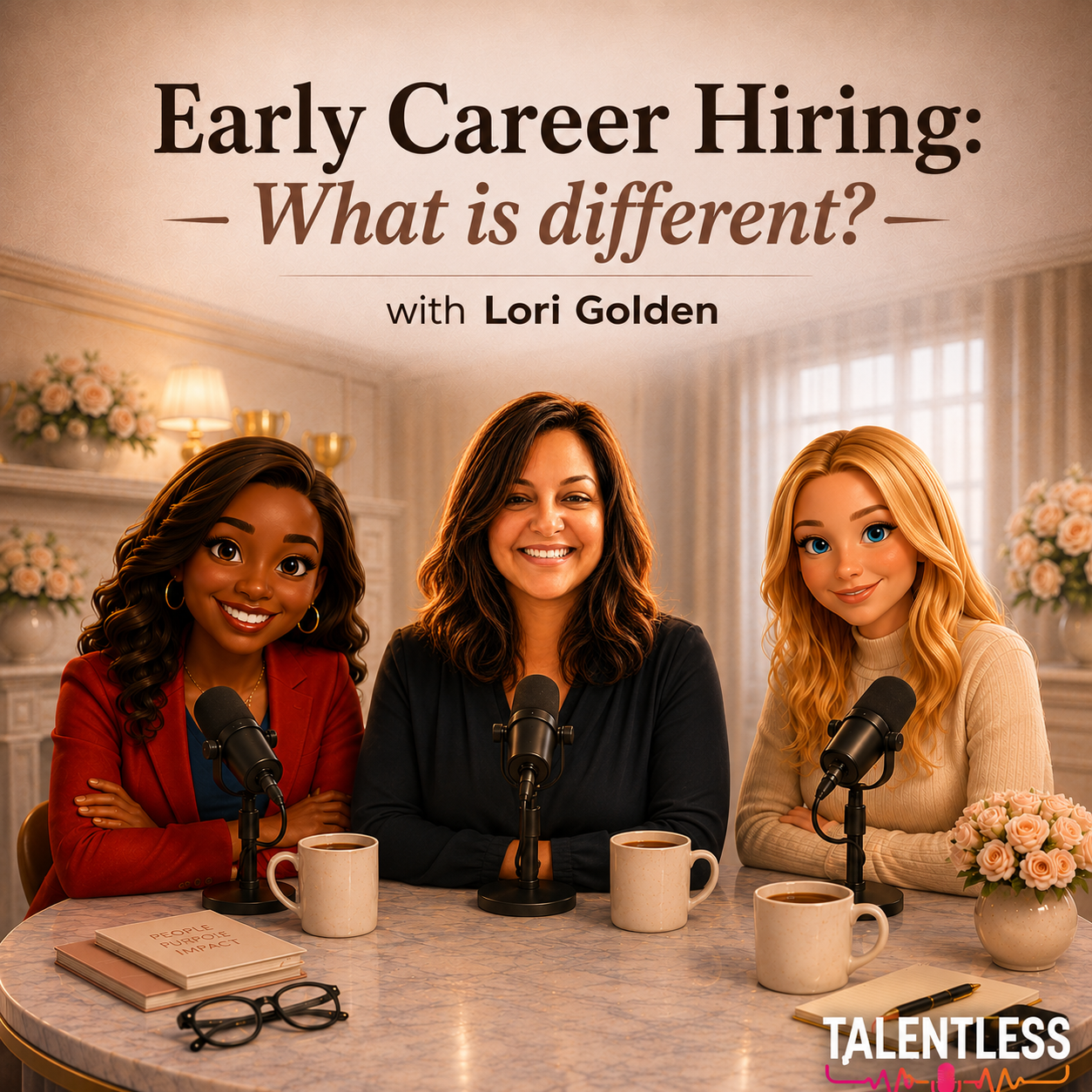
Early Career Hiring:
What is different?
with Lori Golden
In this episode of Talentless, Desiree Goldey, Ashley King, and Lori Golden unpack why the hiring market feels so disconnected for Gen Z candidates, recruiters, and employers alike — and why companies quietly pulled back from investing in early career talent.
Lori brings over 27 years of recruiting experience across agency, startup, and corporate environments to a conversation that goes far beyond campus recruiting. Together, the team explores how hiring expectations shifted after the pandemic, why “entry-level” jobs now demand years of experience, and how AI, social media, and modern work culture are reshaping the future of employment.
Listen to the episode
Hit play below to listen right here — or find us on Spotify and Apple Podcasts.
Episode Transcript
Full conversation — searchable and screen-reader friendly
Desiree: Today we are talking about early career hiring with Lori Golden — Rebel HR, founder of Hire You, and 27 years in recruiting across agency, in-house, and tech startups. Lori, I believe that recruiters genuinely don't know how to do early career hiring. That's a real thing. So let's get into it. What is different now versus a few years ago?
Lori Golden: I think accountability is the right frame — what can you impact versus all that's wrong that you can't? So here's what happened: when Gen Z was hired a couple years ago out of college, there were challenges. Companies reacted. It's not Gen Z's fault — I don't believe in any of this generalization around generations, it's all manufactured division as far as I'm concerned. But the response to the challenge was companies started pulling back on internship hiring, reducing early career hiring, shifting entry-level roles to require two to three years of experience. It's like updating your iOS — I wait until they've worked out the bugs. That's the perception around early career hiring now: let someone else deal with the first two years, then hire them.
Lori Golden: You have to come from their mindset and perspective. If you don't start from the frame of understanding what the gripe is, the energy, the concerns — there is a general discontent with the exploitative nature of employment as a baseline. Which is fair. Accurate. Valid. It's not that it ever hasn't been exploitative, it's just that maybe this is the first generation to say: hey, this is ridiculous. How can you connect survival to employment but then also exploit people? But the issue is we need to have a bigger conversation — I get it that you think things are unfair. But you have to learn to play the game and navigate it if you are to change it.